

Can I park here, and until when?
Stationne decodes the City’s parking signs and colors every side of the street: allowed, no parking, paid, or hatched when the signage isn’t certain. Because a wrong answer costs you a ticket, the app never guesses.


Montreal, 12 months a yearFree, optional Stationne PlusNo account, no ads
Independent app: Stationne does not represent any government entity and is not affiliated with the City of Montreal (Ville de Montréal) or the Agence de mobilité durable (sustainable mobility agency). It reads the City of Montreal’s open data. Posted signs always prevail.
What the app does
Everything a sign doesn’t tell you
From “where can I park?” to contesting a ticket: the whole street parking cycle.
Four states, including “uncertain”
Every side of the street is allowed, no parking, paid, or hatched when the signage can’t be interpreted with certainty. An ambiguous sub-panel, an unknown code, a borough with no data: the app says so instead of making things up.
Find parking
Tell it how long you’re staying: 30 minutes, 2 hours, until 9 AM tomorrow. The app ranks the safe sides of the street within 500 m, leaves out anything uncertain and takes you there. Suggestions are read aloud while you drive.
“I’m parked here”
You confirm the side of the street, always explicitly, because the rule changes from one side to the other. The app tracks the deadline live and warns you 30 minutes ahead, even on the lock screen.
Ticket file
Every time you park, the app creates a file that freezes what it was showing: time, position, verdict, the segment’s rules, the date of the City’s data. Add a photo of the sign, export a PDF. If a ticket arrives, the facts are already there.
Verified on the ground
Tap “It’s right” or “This is wrong,” with a photo of the sign if you like. Segments confirmed by several devices carry a badge. No correction is automatic: each one is reviewed by hand.
Even without a connection
The rules and segments for your neighborhood are downloaded and kept on your phone. The calculation happens on the device: no server is queried when you look something up.
The official sources
Stationne doesn’t make up the rules: it reads the City of Montreal’s open data, and everything is regenerated every morning.
- Signalisation (signage): the geolocated parking signs and their posts
- Places tarifées (paid parking spaces) of the Agence de mobilité durable
- Stationnements de déneigement (snow-removal parking): the lots open for free during snow-loading operations
- Remorquages (towing) of obstructing vehicles
- Géobase double (double street network): one line per side of the street
Data: Ville de Montréal and Agence de mobilité durable (CC BY 4.0 license) · rule decoding based on the work of Prkng (MIT license) · base map OpenFreeMap / OpenStreetMap.
Open, choose, park
No account, no setup, no ads.
The streets light up
Around you, every side of the street takes on its color. Tap one: the official sign, the decoded schedule and the “until when.”
Find a spot
One duration, one button. Five suggestions ranked by walking distance, never an uncertain segment.
Park and forget it
Confirm the side. The app remembers the car, works out the deadline and reminds you before it comes.
Coverage
We also show you what we don’t know
Every side of the street in color, from your neighborhood to the whole island. In gray: where public data doesn’t yet allow a clear answer.
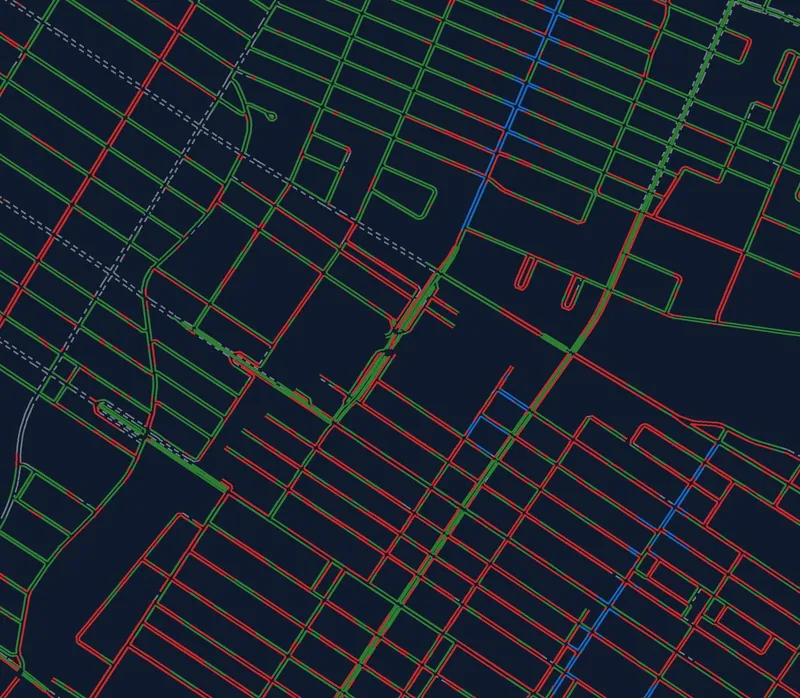
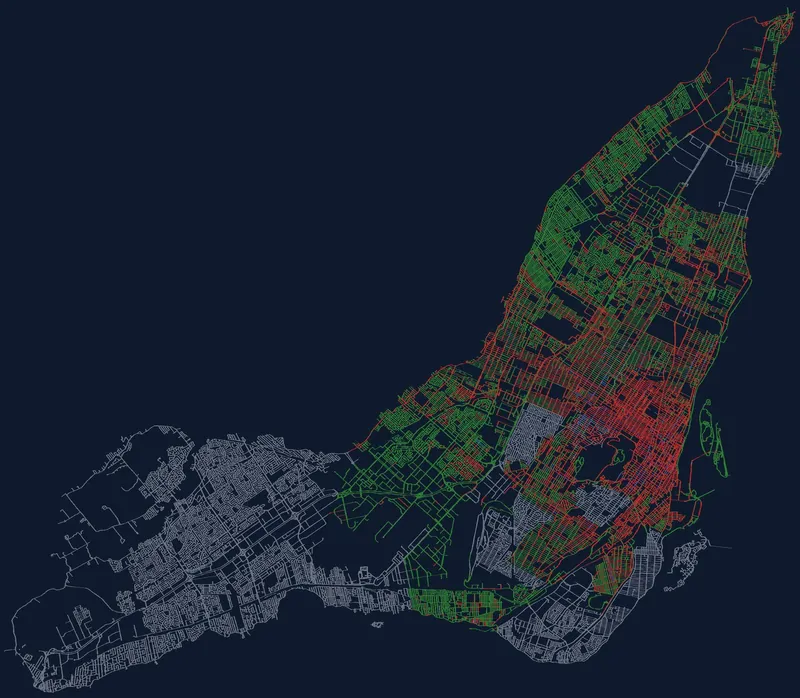
128,784 sides of the street covered · 99.4% of signs decoded · data regenerated every morning.
Reliability is the product
Four boroughs and the linked municipalities (villes liées) don’t publish enough signage to decode their streets: they appear in hatched gray. Some sub-panels and a few rare codes remain ambiguous: gray too.
That’s deliberate. An app that shows “allowed” out of optimism costs you a ticket; this one would rather say “read the sign.” Every week, the gray shrinks: new codes decoded, user corrections, fresh data from the City.
Posted signs always prevail: the app reminds you on every screen.
Winter in Montreal
Snow removal and towing
The season when a misread sign gets your car towed to an impound lot across town.
The free lots
The 126 municipal lots open for free during snow-loading operations, that is 8,143 spaces, ranked by distance from your car, with each lot’s schedule and directions.
Towing risk
Three years of the City’s towing records, attached to the side of the street: “185 in 3 years on this side, 60 of them during snow removal.” High-risk sides drop lower in the suggestions.
Free and subscription
Free or Stationne Plus
Free
To read the street
- The map: every side of the street in color
- Reports, with a photo of the sign
- The free snow-removal lots
- Ten free segment sheets, once and for all
Stationne Plus
To find a spot and avoid the ticket
- Unlimited segment sheets
- Find parking
- Reminder before the deadline
- Ticket file
- Towing risk
Stationne Plus: yearly or monthly subscription, with two free weeks to start. No account, no ads, no trackers. See the price on the App Store or Google Play. Terms · Privacy policy
Frequently asked questions
What people ask us
How does Stationne know the parking rules?
Stationne reads the City of Montreal’s open data: the 144,000 geolocated signs, the posts, the Géobase double (one line per side of the street) and the paid parking spaces of the Agence de mobilité durable. A dictionary decodes each sign’s wording into a schedule, then the rule spreads along the side of the street. Everything is regenerated every morning.
What does a hatched gray segment mean?
Hatched gray means “uncertain”: Stationne couldn’t interpret the signage with certainty, or the borough doesn’t publish enough data. The app never guesses. In that case, read the sign on site.
Does Stationne work offline?
Yes. The rules and segments for your neighborhood are downloaded and cached, and the status is calculated on the device. No server is queried when you look something up.
Does Stationne replace the signs?
No. Posted signs always prevail, and the app reminds you on every screen. Stationne helps you read the signs; it is not an authority.
Is Stationne free?
The download is free. The map, reports and free snow-removal lots stay free, with ten free segment sheets, once and for all. Stationne Plus unlocks the rest: unlimited sheets, Find parking, the reminder before the deadline, the ticket file and towing risk. Two free weeks, then a yearly or monthly subscription. No account, no ads, no trackers.
In the same family

Trust
Your location stays on your phone
Privacy
No account, no ads, no trackers. Your location never leaves your phone: the rules are evaluated on the device. Your parking files and your photos stay with you, except the ones you choose to attach to a report.
Terms
The Stationne Plus subscription is optional and can be canceled in your App Store or Google Play account settings.
The next ticket? You won’t get it.
Two free weeks to start. The map, reports and snow-removal lots stay free.